
Small Business Cybersecurity in Indiana: A Practical Guide
If you run a small business in Indiana, cybersecurity comes down to five things. Know your biggest threats, which are phishing and ransomware. Measure where you stand with the free state scorecard. Lock down the basics: multifactor authentication, patching, and tested backups. Understand the Indiana laws on breaches and data disposal. Write an incident plan before you need one. This guide walks through each, using Indiana and federal sources, and shows where a managed IT partner fits.
TL;DR
- Phishing, ransomware and malware are the threats Indiana organizations worry about most, and most attacks start with a phishing email.
- The free Indiana Cybersecurity Scorecard gives you a baseline in under 15 minutes.
- Start with multifactor authentication, software updates, employee training and offline or isolated backups.
- Indiana’s breach law applies to businesses of any size that hold residents’ personal data, and you need a written response plan.
- If your team cannot cover all of this, a managed or co-managed IT provider can carry the load.
Table of Contents
- What threats Indiana small businesses face
- Measure where you stand first
- The first controls to put in place
- Free Indiana training and resources
- Indiana laws every small business should know
- What to do if you suspect an attack
- How we see small business security
- Choosing the right level of help
- Put a team behind your security
- FAQ
- Sources
What threats Indiana small businesses face
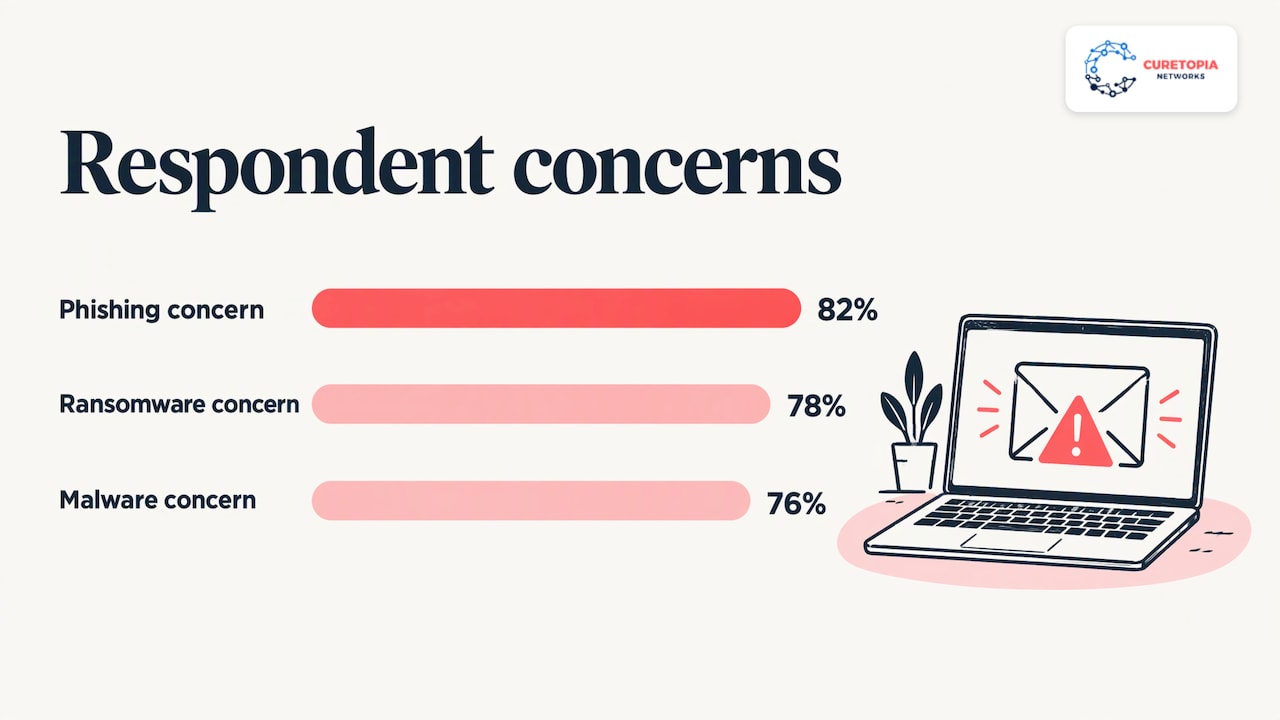
The State of Hoosier Cybersecurity 2025 Report, from the Indiana Cybersecurity Hub, found that over 95% of respondents were significantly concerned about cybersecurity incidents. Among 2023 respondents, 82% named phishing, 78% ransomware and 76% malware. The same report says 91% of cyber-attacks begin with a phishing email.
That last number shapes your priorities. Attackers rarely break through a firewall by force. They send a believable invoice, a fake Microsoft 365 login page or a message that looks like it came from your owner. One click from one employee can give them a mailbox, and from the mailbox they reach files, bank approvals and customer data.
For a small business, the practical consequences are usually:
- Downtime. Ransomware locks the systems your staff need to bill, produce or serve clients.
- Data exposure. Customer, patient, donor or employee records get copied, which triggers legal duties.
- Payment fraud. A compromised email account is used to redirect a legitimate payment.
Size does not protect you. Smaller firms often have the same valuable data as larger ones and fewer people watching for trouble.
Measure where you stand first
Before you buy anything, find out what you already have. Three free tools help.
The Indiana Cybersecurity Scorecard
The Indiana Cybersecurity Scorecard was developed by the State of Indiana and Purdue University. It is a 22-question online tool that returns a score and a report on your overall posture in less than 15 minutes. Have whoever manages your IT, or your office manager, complete it, and keep the report. It is a useful baseline to compare against after you make changes.
NIST’s small business quick-start guide
The NIST Cybersecurity Framework 2.0 Small Business Quick-Start Guide sorts security work into six functions: Govern, Identify, Protect, Detect, Respond and Recover. It is written for small and midsize businesses with modest or no cybersecurity plans. NIST also notes that if parts of the guide are unfamiliar or uncomfortable to tackle yourself, you can use it as a discussion prompt with a managed security service provider or other helper.
Federal self-assessment resources
The U.S. Small Business Administration recommends a risk assessment that identifies vulnerabilities and leads to a plan covering employee training and email security. It points to tools such as the FCC Planning Tool, the DHS Cyber Resilience Review, DHS free cyber hygiene vulnerability scanning and CISA’s Cyber Essentials guide.
If you would rather have a person walk through your environment with you, we offer a free IT assessment for Indianapolis and Central Indiana organizations.
The first controls to put in place
CISA’s guidance for small and medium businesses lists eight best practices. They include teaching employees to avoid phishing, requiring strong passwords and multifactor authentication, updating business software, using logging, backing up and encrypting business data, and reporting cyber incident information to CISA.
The Indiana SBDC’s Indiana Ransomware guide gets more specific about ransomware. It recommends:
- Making encrypted backups daily and isolating them so they cannot be deleted or destroyed.
- Knowing what data you collect, encrypting it and tracking who accesses it.
- Segmenting your network, with firewalls around critical data.
- Adding multifactor authentication for administrator logins.
- Applying software patches on time.
Here is how that translates into a sensible order of work for a small team.
| Priority | Control | What it stops |
|---|---|---|
| 1 | Multifactor authentication on email, remote access and admin accounts | Stolen passwords turning into account takeover |
| 2 | Regular patching of computers, servers and network devices | Attacks on known software flaws |
| 3 | Employee phishing training, repeated through the year | The click that starts most attacks |
| 4 | Encrypted, isolated daily backups, with restore tests | Ransomware turning into a shutdown |
| 5 | Firewall and network segmentation | Attackers moving freely once inside |
| 6 | Written incident response plan | Confusion and delay during a breach |
Two points deserve emphasis. A backup that has never been restored is a hope, not a plan, so schedule a restore test. And firewalls only help if someone keeps them configured and updated. Our guide to firewall management for Indiana businesses covers what ongoing care looks like, and if your staff work from home, see our piece on securing remote work.
Free Indiana training and resources
You do not have to pay to start. The Indiana Cybersecurity Hub’s training and events page lists a free downloadable Indiana Privacy Toolkit, a Personally Identifiable Information Guidebook for businesses large and small, and CISA incident response training. The Hub also links to guidance from the Indiana Executive Council on Cybersecurity.
The Indiana Small Business Development Center publishes the Data Assured materials cited in this article, including a ransomware guide and an incident workbook. Your regional SBDC office can point you to them.
Free resources do an excellent job of telling you what to do. They do not do it for you. Applying patches every month, watching alerts and testing restores is ongoing labor, and that is the gap a managed provider fills.
Indiana laws every small business should know
This section is general information, not legal advice. If you think you have had a breach, talk to an attorney experienced in breach response.
The breach notification law
The Indiana Attorney General’s security breach FAQ explains that a breach is an unauthorized acquisition of computerized data that compromises the security, confidentiality or integrity of personal information. Affected consumers must be notified without unreasonable delay, by mail, telephone, fax or email. Substitute notice is allowed when regular notice would cost more than $250,000 or the affected class exceeds 500,000 Indiana residents, and then it means conspicuous posting on your website and notice to statewide media.
Two further duties from the same page: notify consumer reporting agencies if more than 1,000 Indiana residents are being notified, and report to the Attorney General by completing the Breach Notification Form and emailing it to [email protected]. Missing these steps can bring penalties under the statute.
The Indiana Consumer Data Protection Act (ICDPA)
The ICDPA took effect January 1, 2026. It covers for-profit businesses that operate in Indiana or target Indiana residents and process data of at least 100,000 residents, or at least 25,000 residents while earning more than 50% of gross revenue from selling personal data. It has a permanent 30-day cure period and broadly exempts entities and data already governed by federal laws such as HIPAA, GLB, FCRA and FERPA.
Most small businesses fall below those thresholds. That does not mean you are off the hook. The Indiana Cybersecurity Hub’s SMB Top Ten Privacy Best Practices says businesses under the ICDPA threshold still need to secure Hoosier data and must have a data deletion plan to comply with Indiana’s Data Disposal Law.
If you handle regulated data, such as client financial records, your industry may add its own requirements. Our CPA firm IT security checklist is one example of how that looks in practice.
What to do if you suspect an attack
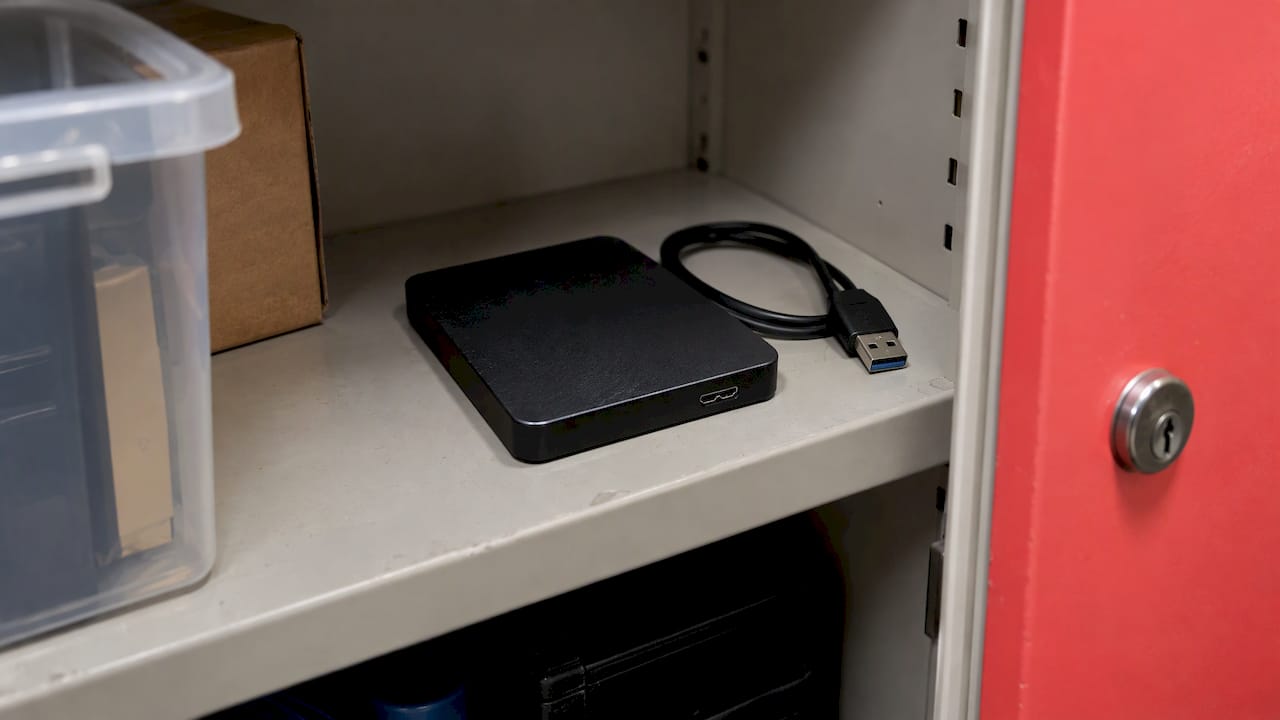
The Indiana Cybersecurity Hub’s Quick Response Guide gives the sequence: tell management, consult your incident response plan and contact your cyber insurer if required. It also recommends reporting cybercrime to law enforcement, backing up critical systems daily to a separate offline device, refreshing employee training and revisiting your response plan afterward.
The Indiana SBDC’s Data Assured Workbook advises that your first call should likely be to an attorney who knows breach response and remediation. It also notes that in a small business, the owner or one employee may fill every role on the response team, and that is fine as long as you know where to get help in each area, including legal.
The Hub’s Privacy Toolkit 2026 adds recovery steps: notify affected individuals promptly as the law requires, report to state authorities with the Indiana Data Breach Notification Form, notify law enforcement if a crime is suspected, restore from clean backups, verify the restored data, apply patches and tell customers what happened and what you did to protect them.
The best advice may be in the SMB privacy document: write down who does what ahead of time, including who calls the Attorney General and who contacts customers, and practice it. A one-page plan with names and phone numbers, printed and stored offline, beats a perfect plan nobody can find.
How we see small business security
Most small businesses we meet do not have a security problem so much as a pile of unconnected IT decisions. One vendor set up email, another handles the firewall, a third sold a backup product, and nobody is accountable for how the pieces work together.
That is why we manage IT as one integrated environment. Security is not a separate product bolted on at the end. It runs through how we handle patching, identity, backups, networks and cloud tools like Microsoft 365, so that gaps do not sit between vendors.
We also aim at root causes. If the same issue keeps coming back, restarting something is not the answer. Our approach is to find out why it happens and fix that, backed by a technology roadmap that ties spending to what your business is trying to do.
For Indiana organizations that already have an IT person, co-managed support can add security monitoring, backups and strategy without replacing them. For those without, a managed relationship gives you one accountable team. Either way, you should know who is responsible and what they are doing.
Cameron
Choosing the right level of help
The NIST guide itself suggests bringing in a managed security service provider when parts of the work are beyond your comfort. In practice, the decision usually looks like this:
- No internal IT staff: a fully managed IT services arrangement gives you support, security and planning in one agreement.
- One IT person or a small team: co-managed IT fills gaps such as after-hours coverage, security tooling and project work.
- Unsure what you need: a vCIO engagement produces a roadmap and priorities before you commit to anything larger.
- Specific industry obligations: see our IT services by industry, including nonprofit IT services.
Whatever you choose, ask who is accountable for each control in the table above, and get the answer in writing.
Put a team behind your security
Curetopia Networks provides managed IT and cybersecurity for organizations in Indianapolis and Central Indiana. Our cybersecurity services work alongside backup and disaster recovery, network management and cloud administration, so your protections are planned together and someone is accountable for them.
To see where you stand, request a free IT assessment, or read about our backup and disaster recovery service if ransomware recovery is your biggest worry. Pricing depends on your environment, so we scope it with you.
FAQ
Do small businesses in Indiana really get targeted?
Yes. Indiana’s own survey found over 95% of respondents significantly concerned about cybersecurity incidents, and the same report says 91% of attacks start with phishing. Attackers send these messages in bulk, so they do not need to know who you are. Any business with email, customer data or payment processes is a target.
Where should a small business start with cybersecurity?
Take the free Indiana Cybersecurity Scorecard to get a baseline. Then enable multifactor authentication, keep software patched, train your staff on phishing and set up encrypted, isolated daily backups. These match the practices recommended by CISA and the Indiana SBDC.
Does the Indiana privacy law apply to my small business?
The ICDPA applies based on how many Indiana residents’ data you process, not on business size. The thresholds are 100,000 residents, or 25,000 with more than 50% of revenue from selling data. Even below them, the state’s guidance says you must secure Hoosier data and follow the Data Disposal Law. Ask an attorney how it applies to you.
What should I do first after a suspected breach?
Involve management, follow your incident response plan and contact your cyber insurer if required. Indiana SBDC guidance says your first call should likely be to an attorney experienced in breach response. Then report to law enforcement if a crime is suspected, and meet the Attorney General’s notification requirements.
Sources
- State of Hoosier Cybersecurity 2025 Report
- Indiana Cybersecurity Scorecard
- NIST Cybersecurity Framework 2.0 Small Business Quick-Start Guide
- SBA: Keep Your Business Safe from Cybersecurity Threats
- CISA: Secure Your Business
- Indiana SBDC: Indiana Ransomware
- Indiana Cybersecurity Hub: Training/Events
- Indiana Attorney General: Security Breach FAQs
- Hunton: Indiana Privacy Law To Take Effect January 1, 2026
- Indiana Cybersecurity Hub: SMB Top Ten Privacy Best Practices
- Indiana Cybersecurity Hub: Quick Response Guide
- Indiana SBDC: Data Assured Workbook V13
- Indiana Cybersecurity Hub: Privacy Toolkit 2026